Blue Color Codes: Discover Perfect Shades
Blue is a universally adored color, often associated with calmness, trust, and stability. But what's lesser known is the fascinating world of blue color codes. These codes, ranging from #0000FF (navy blue) to #ADD8E6 (light blue), are the backbone of color representation and usage in the digital realm.
Whether you're a graphic designer, a web developer, or a tech-savvy individual, understanding blue color codes can significantly enhance your projects. So, let's dive into the intricacies, from basic definitions to helpful resources, ensuring your blue hue game stays on point.
Understanding Blue Color Codes
Blue color codes are fundamentally broken down into RGB, HSL, Hex, and CMYK formats. Let's explore each.


RGB, or Red, Green, Blue, is an additive color model. In RGB, blue is represented by the value 'B'. A blue with maximum intensity would be RGB(0, 0, 255).
RGB Format
The RGB format is widely used in web design and digital media. Each color's intensity is defined on a scale of 0-255, with 255 being the highest. For example, the RGB values for a vibrant blue would be RGB(0, 0, 255).


But one limitation of RGB is that it's not as precise as other models for printing. That's where CMYK comes in.
CMYK Format
CMYK, or Cyan, Magenta, Yellow, Key (black), is a subtractive color model used in printing. In CMYK, blue isn't a primary color, but it can be created using various combinations of cyan and magenta. For instance, a rich blue might be CMYK(100, 50, 0, 50).
Now, let's discuss Hex and HSL formats, which are incredibly useful for web design.


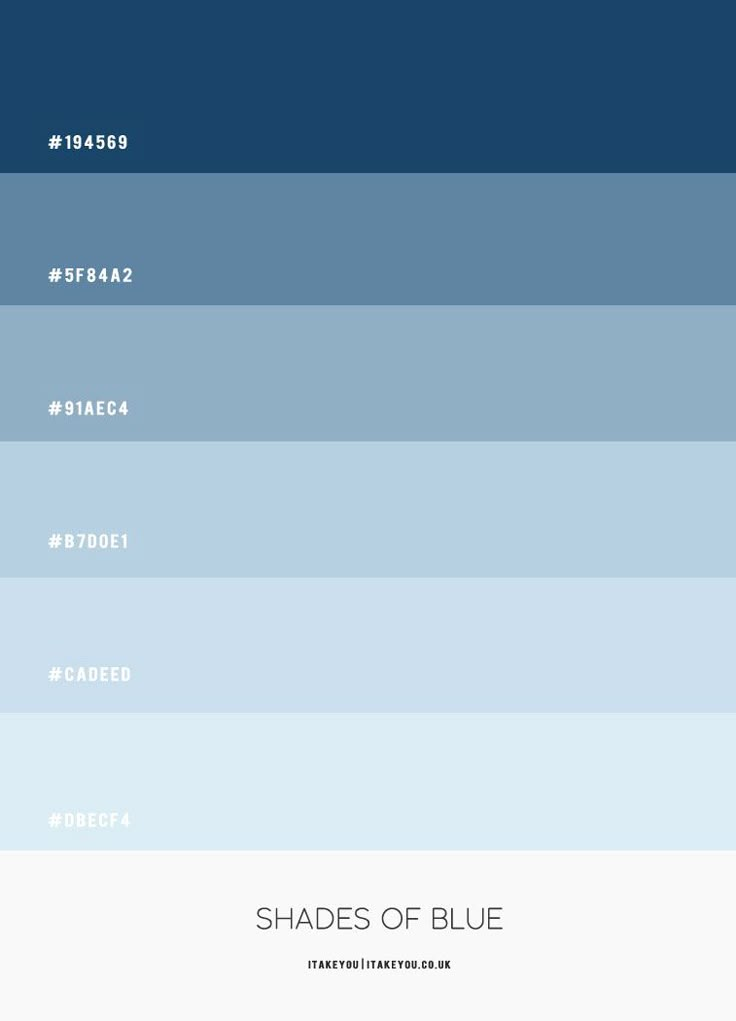


Hex and HSL Formats: Web Design's Best Friends
Hex, or Hexadecimal, is a numerical system with a base of 16, widely used in web design. In Hex, blue is represented as #0000FF. Each double-digit pair (upon converting RGB to Hex) corresponds to the intensity of red, green, and blue respectively.
HSL, or Hue, Saturation, Lightness, is another model that provides an alternative way to think about color. In HSL, blue is represented near the 240° mark on the hue scale.
Hex Format
Hex codes are simple to understand and use. The '#' symbol is followed by six characters, where the first two denote the intensity of red, the next two green, and the last two blue. For instance, #0000FF is a deep blue, while #ADD8E6 is a much lighter blue.


Hex codes are not only easy to remember but also easily intuited by seeing the color they represent, making them indispensable tools for web designers.
HSL Format
In HSL, hue is represented as a degree on the color wheel, saturation as a percentage of the maximum intensity (100%), and lightness as a range between 0% (black) and 100% (white). Blue hues typically fall between 230° to 270° on the hue scale.
Understanding HSL can help you maintain color vibrancy even when adjusting lightness, a task that's not as straightforward with RGB or Hex.
Whether you're tweaking a company logo, driving web traffic with a captivating CTA button, or enhancing UX with intuitive color schemes, understanding blue color codes can only empower your designs. So, the next time you find yourself pondering over that perfect blue hue, remember: the power of blue is in your codes.


