12V Battery Protection: Auto Cut-off Circuit Ensures Safety and Longevity
Ensuring the longevity and safety of your 12V battery is paramount, especially if you're using it in critical applications like automotive, camping, or off-grid living. One effective way to accomplish this is by implementing a 12V battery protection auto cut off circuit. This circuit safeguards your battery from excessive discharge, which can lead to permanent damage and reduced lifespan. Let's delve into the intricacies of this circuit, its components, and its benefits.
Before we delve into the circuit design, it's essential to understand why protecting your 12V battery is crucial. A 12V battery, when fully charged, holds around 12.8V to 13.2V. When drained, it drops to about 10.5V to 12V. Any voltage lower than this can cause irreversible damage, hence the need for a protection circuit that kicks in when the battery level reaches a critical point.
Components of a 12V Battery Protection Auto Cut Off Circuit
The primary components of a 12V battery protection circuit are a battery monitor IC, a voltage comparator, and a power switch. These components work together to continuously monitor the battery voltage and cut off power when the voltage drops below a set threshold.


A battery monitor IC like the popular MCP19127 measures and provides an alert when the battery voltage reaches a user-programmable low-voltage threshold. The voltage comparator, on the other hand, compares the measured voltage with the threshold and generates a digital output when the measured voltage is below the threshold. The power switch, usually a MOSFET, connects and disconnects power based on the comparator's output.
Selecting a Battery Monitor IC
When selecting a battery monitor IC, consider factors like power consumption, accuracy, available alerts, and ease of use. The popular MCP19127 measures only 1μA of current and has an accuracy of ±0.5% over its operating temperature range. It also provides analert with an open-drain output when the battery voltage drops below the set threshold.


Other ICs like the MAX1726 provide multiple alert thresholds and fuel gauge functionality, making them suitable for more complex battery management systems. However, these high-end ICs may not be necessary for a simple auto cut off circuit.
Choosing a Voltage Comparator
A voltage comparator like the widely-used LM393 compares two inputs and generates a digital output depending on which input is higher. For our application, we connect one input to the battery monitor IC's alert pin and the other input to a reference voltage representing the threshold (typically around 10.5V to 12V, depending on your battery type).
When the battery voltage drops below the threshold, the comparator toggles its output, triggering the power switch to disconnect the load.


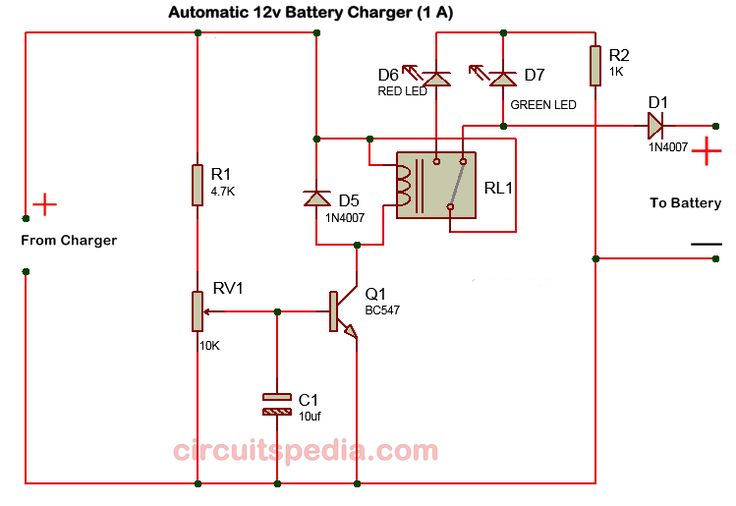


Designing the Power Switch Circuit
For the power switch, a MOSFET (metal-oxide-semiconductor field-effect transistor) is an ideal choice due to its low on-state resistance and fast switching capability. An N-channel MOSFET works best in this scenario as we're dealing with negative voltages. The gate of the MOSFET connects to the output of the voltage comparator.
When the output of the comparator toggles, it triggers the gate of the MOSFET, turning it off and disconnecting the load from the battery. A pull-up resistor on the gate ensures the MOSFET is off when the comparator's output is low. This Simple circuit design ensures that your 12V battery is protected from excessive discharge, extending its lifespan and preventing potential damage.
The implementation of a 12V battery protection auto cut off circuit might seem daunting, but with the right components and a clear understanding of the design, it's quite straightforward. By safeguarding your battery from excessive discharge, you're investing in its longevity and the reliability of your power system. So, don't wait, start building your circuit today and ensure the safety and longevity of your 12V battery.


